Our history
2023 feiern wir 125 Jahre VS!

One part of the history Albert Ramminger (1851-1898), a vocational school teacher in Tauberbischofsheim since 1876, set up his own business.
Columbus school benchRamminger and his brother-in-law, Konrad Stetter, operated a steam joinery in a newly erected factory. Starting in 1890, Ramminger & Stetter manufactured the patented Columbus school bench in Tauberbischofsheim – a robust item of furniture with cast iron side pieces and movable pendulum seats.
The other part of the history By far the most successful school bench in Germany was the Rettig bench, conceived by architect Wilhelm Rettig. Its design was patented by Berlin-based company P. Johannes Müller & Co. The heightened footrest made getting into and out of the school bench much simpler. Thus space was saved and folding seats were no longer needed.
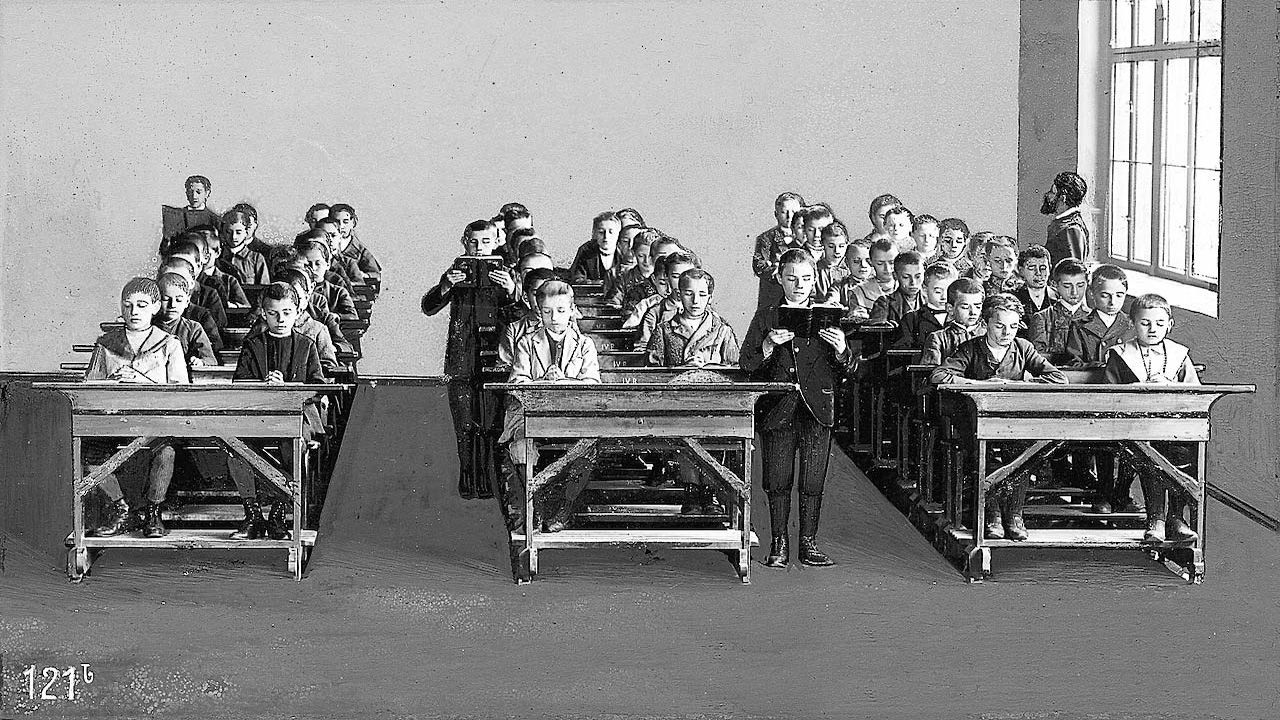
The Rettig school bench was patented. P. Johannes Müller & Co, located in Charlottenburg, and later in Berlin was the manufacturer or licensor.
The Rettig school bench was patented. P. Johannes Müller & Co, located in Charlottenburg, and later in Berlin was the manufacturer or licensor.
The Rettig school bench was patented. P. Johannes Müller & Co, located in Charlottenburg, and later in Berlin was the manufacturer or licensor.
Establishment of VS in the year 1898 On 15 May 1898, the amalgamated company started business under the name Vereinigte Schulbankfabriken. The production site was Tauberbischofsheim, the commercial side was managed by the firm’s headquarters in Stuttgart. P. Johannes Müller & Co continued to exist as an independent company in Berlin and looked after the entire Northern German sales area. Paul Johannes Müller brought the patent for the manufacture of the Rettig bench into the new company and thus held a special position in the partnership contract. In the year it was established, VS employed around forty staff, one year later it was already sixty-five.
New company nameThe firm’s name was changed from Vereinigte Schulbankfabriken to Vereinigte Schulmöbelfabriken.
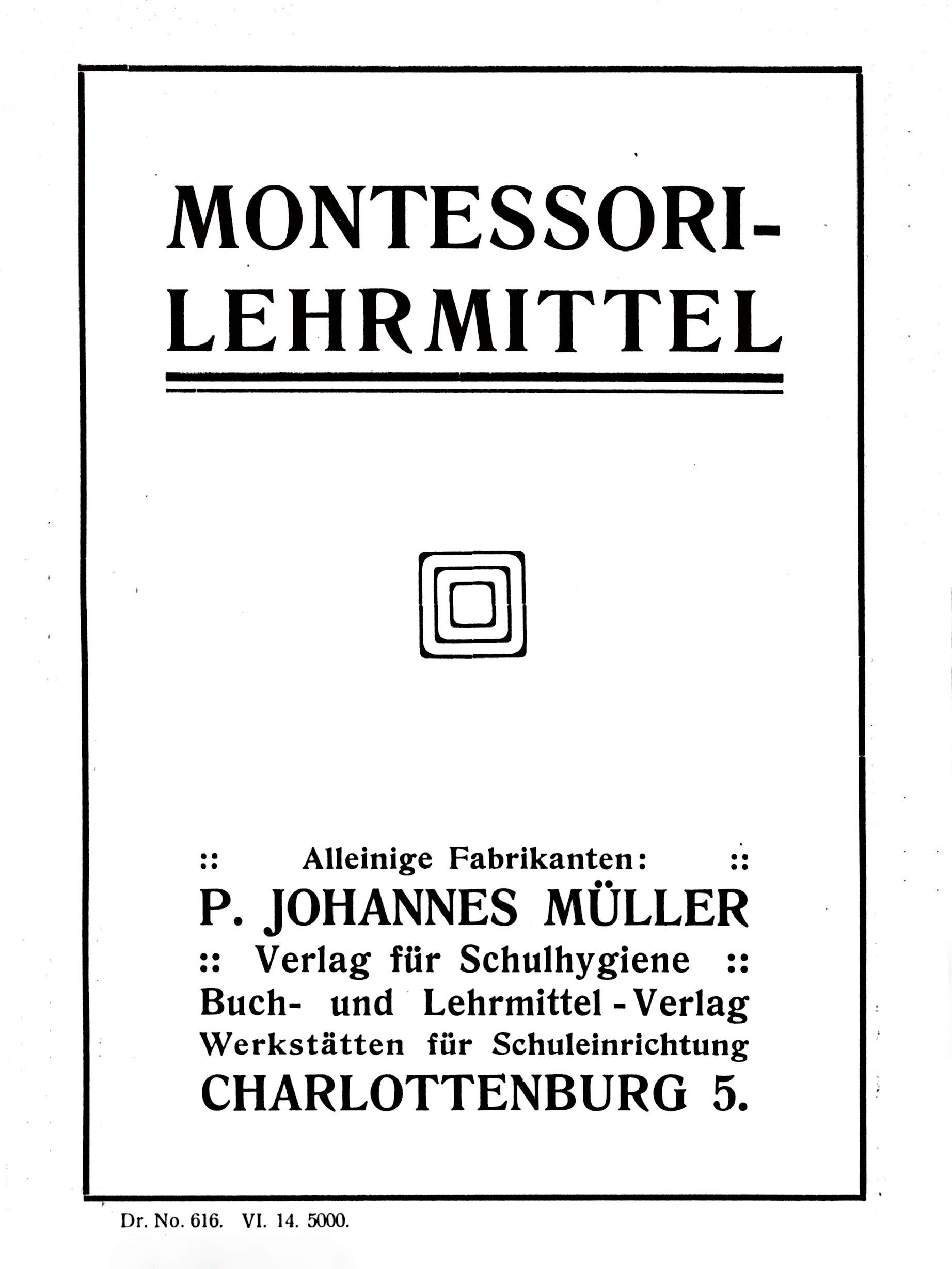
Montessori teaching aids
P. Johannes Müller & Co: sole manufacturer and distributor of Montessori teaching aids in Germany.
Commercial ups and downs
Because the railway was largely reserved for troop transport during World War I, delivery of VS furniture mostly came to a standstill. Production fell significantly: In 1918, the company sold only 15 per cent of the number of items sold before the war. Production was shifted to transport crates for the infantry, parts for army horse-drawn wagons and furniture for prisoner-of-war camps.
Difficult years after World War I
The demand for school furniture rose gradually and reached about one third of the pre-war level. VS was looking for alternatives to school furniture and, commissioned by the Republic’s property administration, the firm became involved in manufacturing inexpensive bedroom and kitchen furniture for homes of refugees and evacuees. Inflation was soaring and the business outlook became more and more bleak.
New contracts in the NetherlandsVS won contracts in the Netherlands, paid in stable cash. This capital was largely invested in new machinery and the modernization of the factory.
VS factory on fireOn August 30, a fire destroyed the VS factory building. School benches ready for delivery to the Netherlands were burnt to a cinder. Once inflation had slowed down, the reconstruction of factory assets could begin. These works were finally completed in 1935.
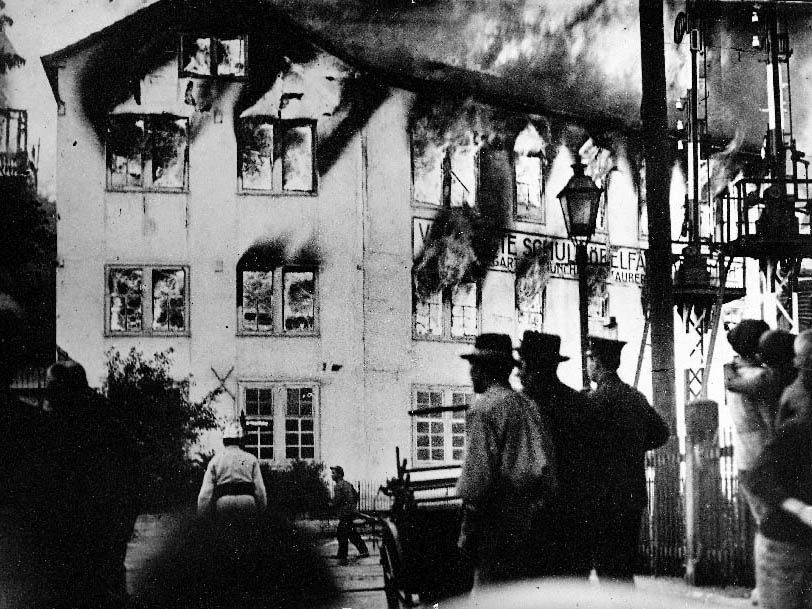
This old photograph shows the fire on the VS site.
This old photograph shows the fire on the VS site.
This old photograph shows the fire on the VS site.
A fresh start after World War IISixty per cent of all class rooms in Germany were destroyed. At the same time, because of refugee movements and displaced persons coming from the eastern territories, the number of pupils rose to 7.2 million compared to 5.1 million in 1935. But municipalities still had barely any tax revenue with which to purchase new school furniture.
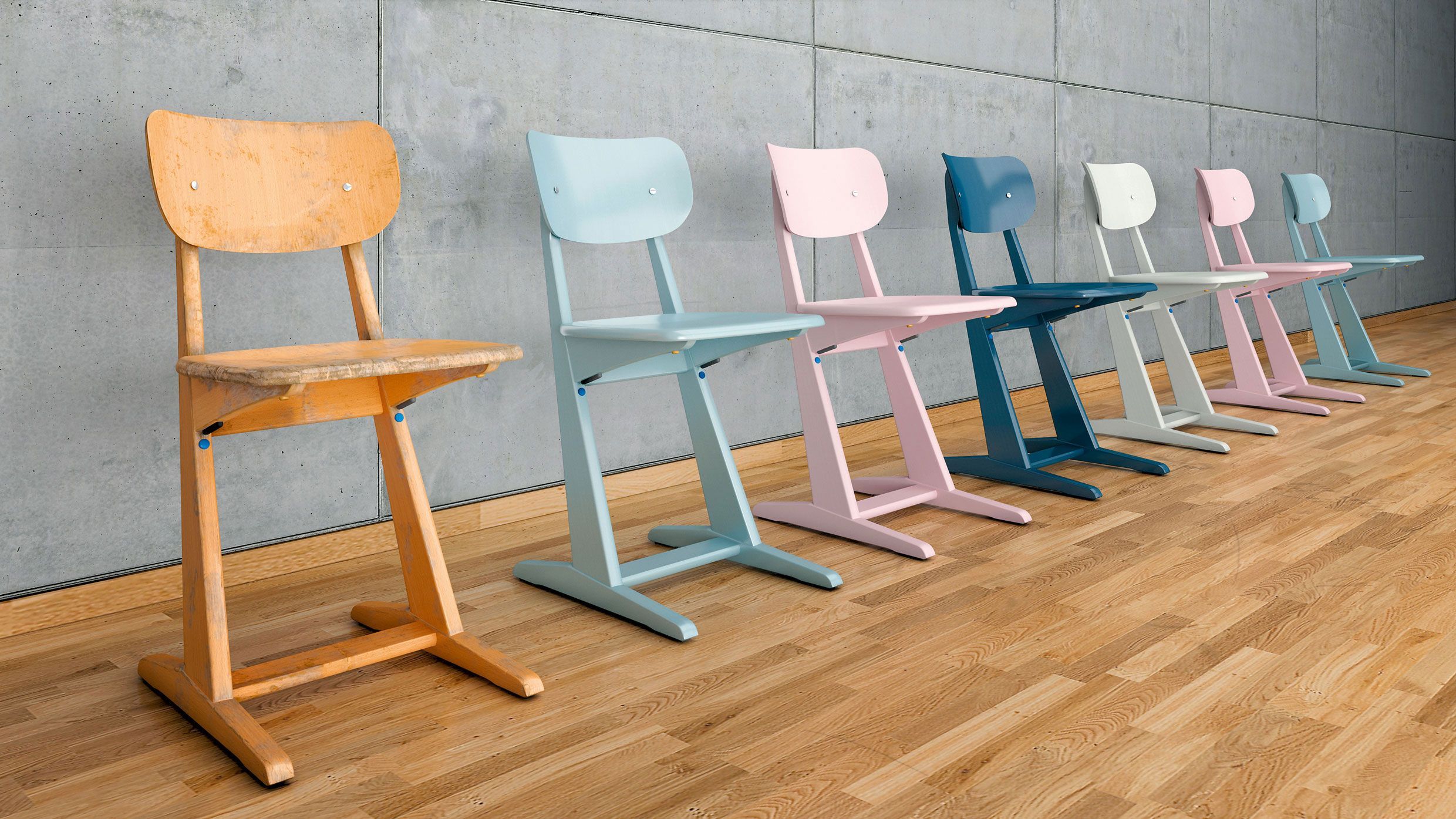
Best seller The skid chair designed by Karl Nothhelfer was patented; the patent-holder was Falk Müller, son of Paul Johannes Müller. The VS skid chair shaped classroom arrangements in the 1950s and 1960s. By 2006, about six million items had been sold – making it one of the most long-lived products in the history of post-war Germany.
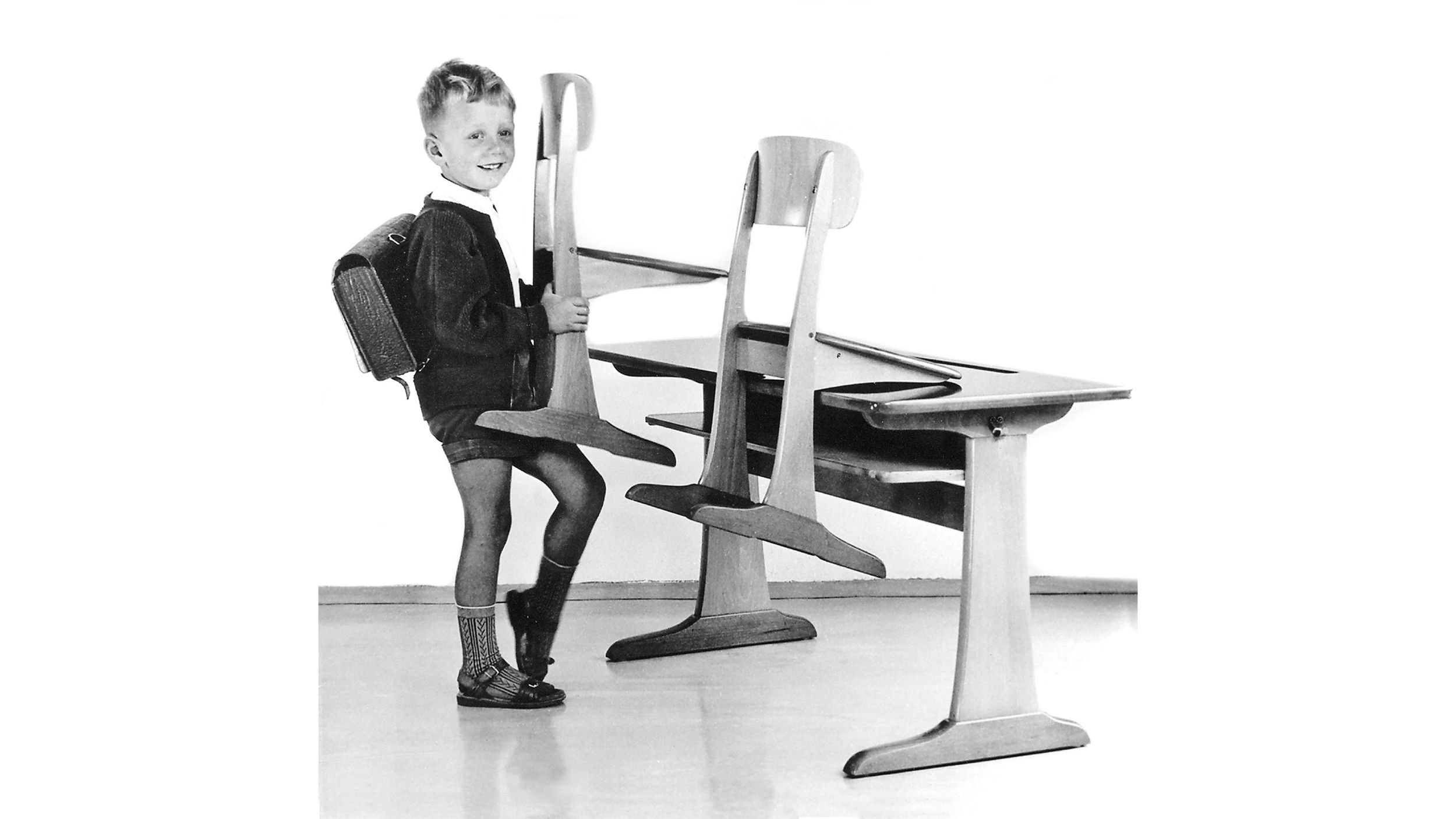
The piggy-back principle patented by VS: with a rubber pad under the seat support, the chair can be placed gently on the tabletop to make cleaning the classroom easier. Thanks to the two-legged design, the skid chair also offers increased pupil legroom.
The piggy-back principle patented by VS: with a rubber pad under the seat support, the chair can be placed gently on the tabletop to make cleaning the classroom easier. Thanks to the two-legged design, the skid chair also offers increased pupil legroom.
The piggy-back principle patented by VS: with a rubber pad under the seat support, the chair can be placed gently on the tabletop to make cleaning the classroom easier. Thanks to the two-legged design, the skid chair also offers increased pupil legroom.
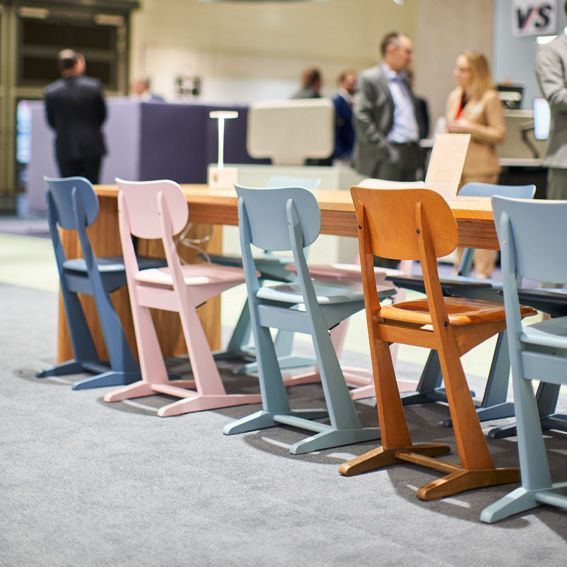
The wooden skid chair is still very popular. It can be seen in a new guide at trade fairs.
The wooden skid chair is still very popular. It can be seen in a new guide at trade fairs.
The wooden skid chair is still very popular. It can be seen in a new guide at trade fairs.
VS presented itself on an international stageAt the Brussels World’s Fair of 1958, in the German pavilion dedicated to education and learning, VS displayed a number of pupils’ workplaces consisting of tables and swivel chairs made from tubular steel conceived by Falk Müller. The frame and the swivel mechanism were designed as purely metal constructions.

The German Bundestag