Today, we know that a specific protein in the myokine group supports higher neurocognitive performance. Children therefore intuitively sense what is important for them.
Another girl has retreated to a hammock with a book. The position looks anything but “healthy for her back,” but she reads intently for minutes on end. Her posture is ideal for this moment: self-chosen, comfortable, relieving. This shows how children respond to their own body signals in a differentiated manner according to their needs when they are given the freedom to do so.
Furniture as a motivator for movement
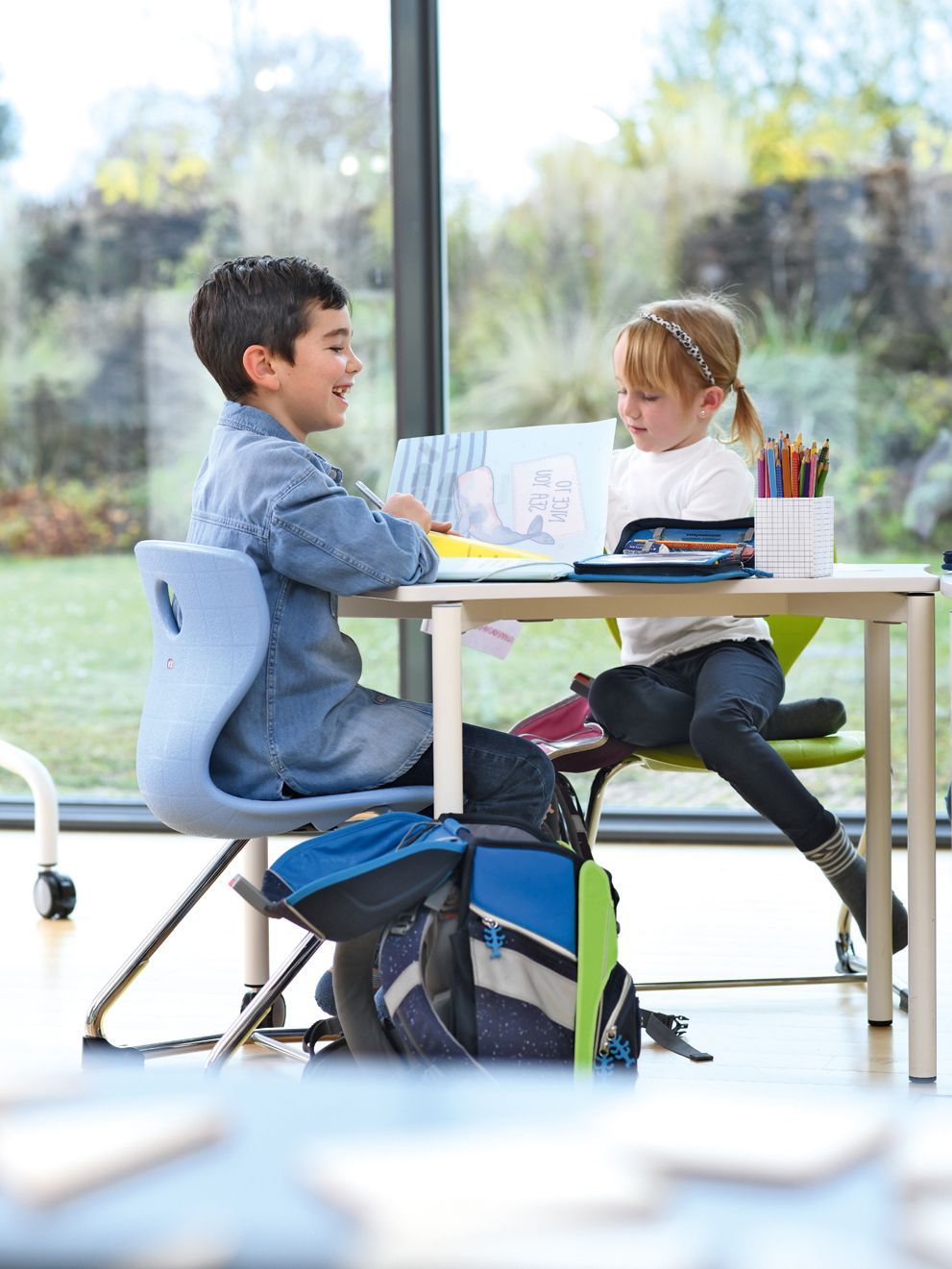
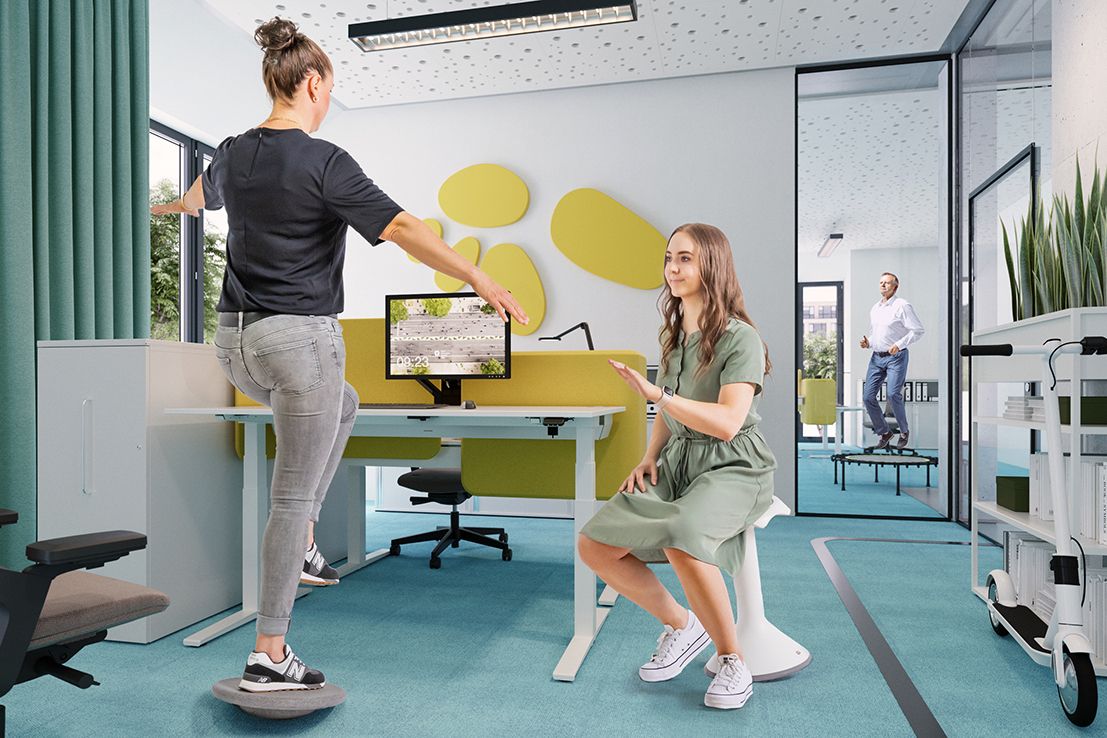
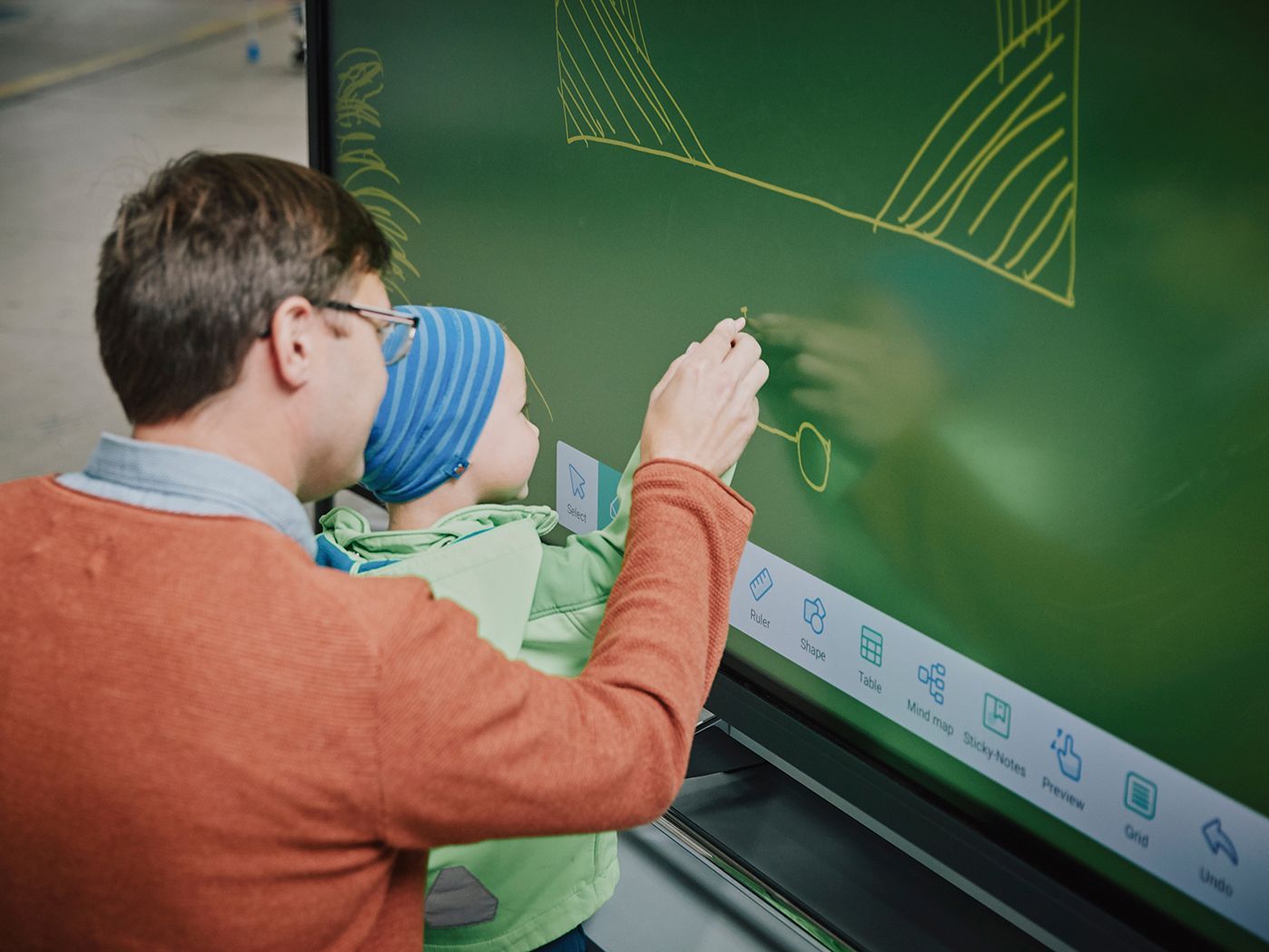
Many schools are now creating spaces that respond to such movement needs. Flexibly movable furniture, standing tables, platforms, stools, chairs with a rocking function, or vertical work surfaces create conditions under which children can intuitively change their behavior patterns.
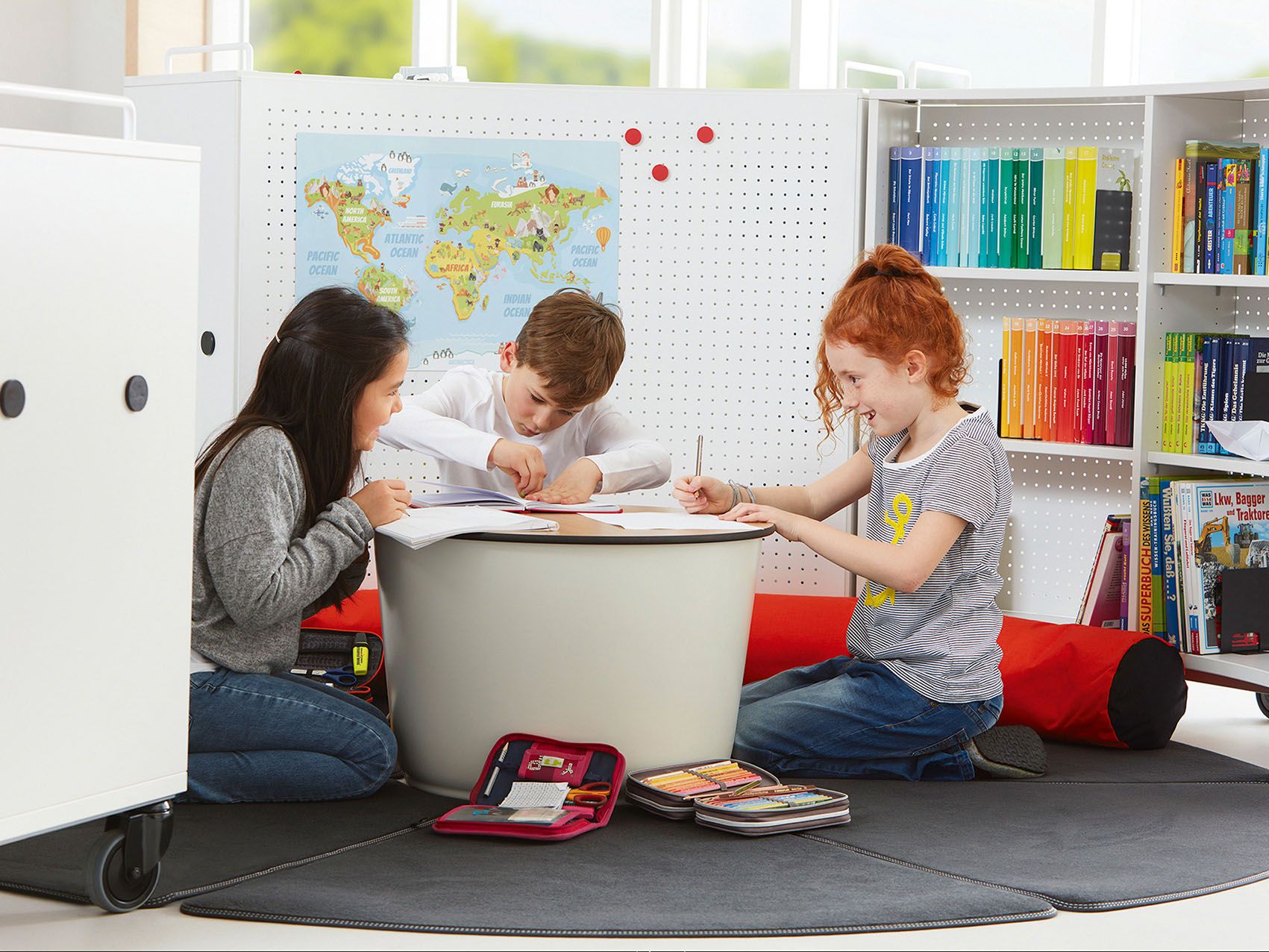
What is important is not so much the individual piece of furniture as the systemic whole, which encourages children to help shape their learning environment themselves as needed. A chair with a dynamic seat that moves in a controlled three-dimensional manner is not a risk, but an invitation to sit dynamically. A carpet with floor cushions does not replace a classroom, but it expands the learning landscape.
In this way, physical activity is understood as a natural part of learning. At the same time, the image of “correct” behavior is changing: sitting still and obedience are no longer the focus, but rather curiosity, activity, and cooperation. Movement-friendly furniture is therefore not an aesthetic question, but an educational necessity. Learning spaces thus become lively places where movement, play, and interaction form the basis for sustainable learning.
The attitude of adults is crucial: do we trust that movement will help children achieve greater concentration and well-being—or do we continue to force them into forms that contradict their developmental physiological needs?