.
All-Day School: What is it actually?
All-day schooling is about looking after pupils in the primary stage and secondary stage I for longer than is the case in standard schools, which usually end before lunch.
In compulsory all-day schools, lessons and leisure time are linked rhythmically, the children are provided with a hot lunch, often stay until 4 or 5 o’clock and attendance is mandatory.
By contrast, attendance at open all-day schools is voluntary. Compulsory education is largely in the mornings; after a communal lunch, there is usually supervised homework and a leisure offering.
Unlike an after-school care centre, all-day schools have a comprehensive educational mandate and don’t just offer childcare in the afternoons.
Setting a Good Example
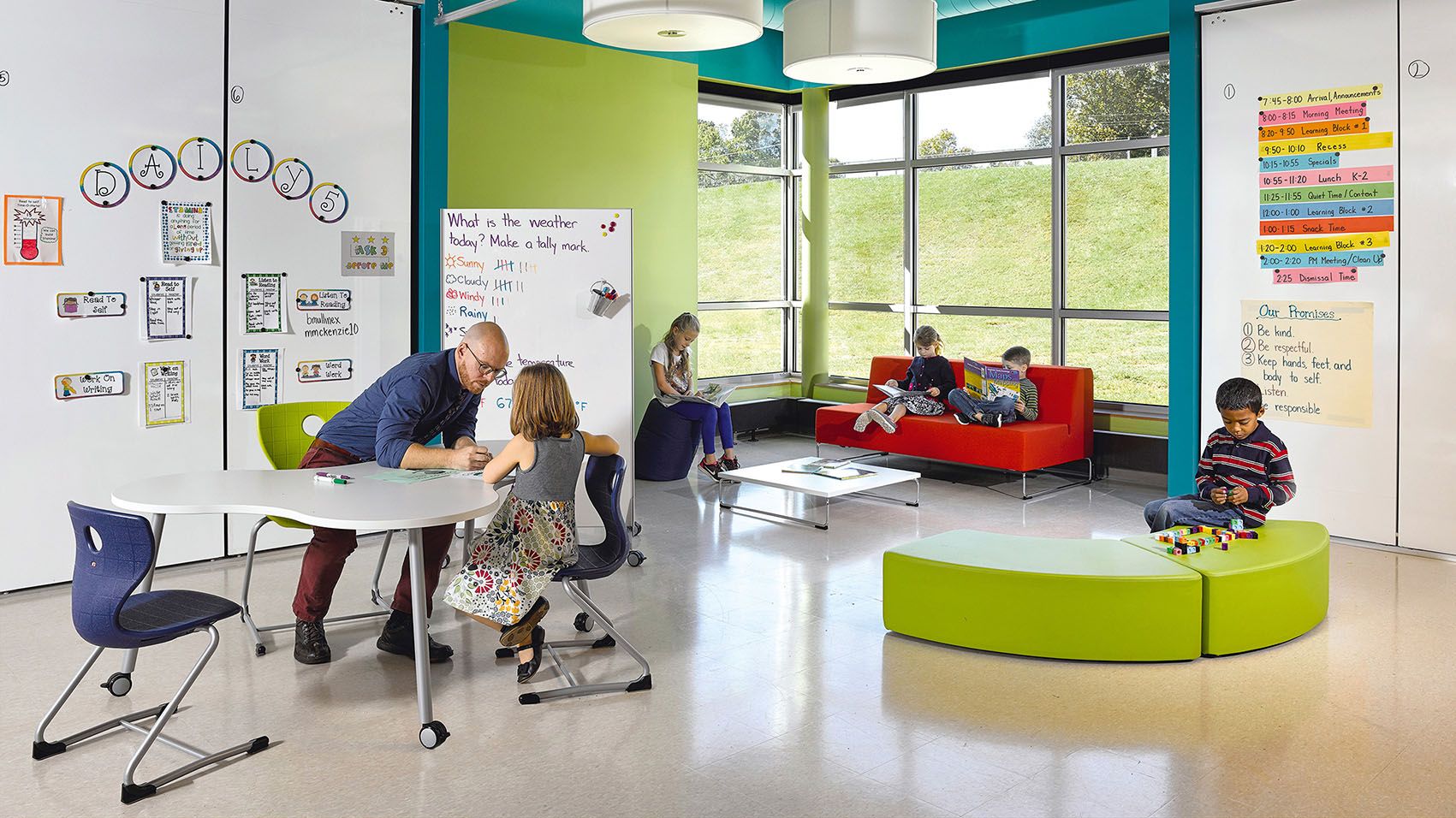
Today, model schools with all-day offerings are learning landscapes in which children work and eat, play and study, paint and make music, do crafts and build, read and surf in digital worlds - or simply chill.
A good example of this is the Grundschule auf dem Süsteresch primary school, winner of the German Schools Prize. Go here to find out how the school in Schüttorf, Lower Saxony, has turned itself from a crumbling old building into a prize-winning all-day school.
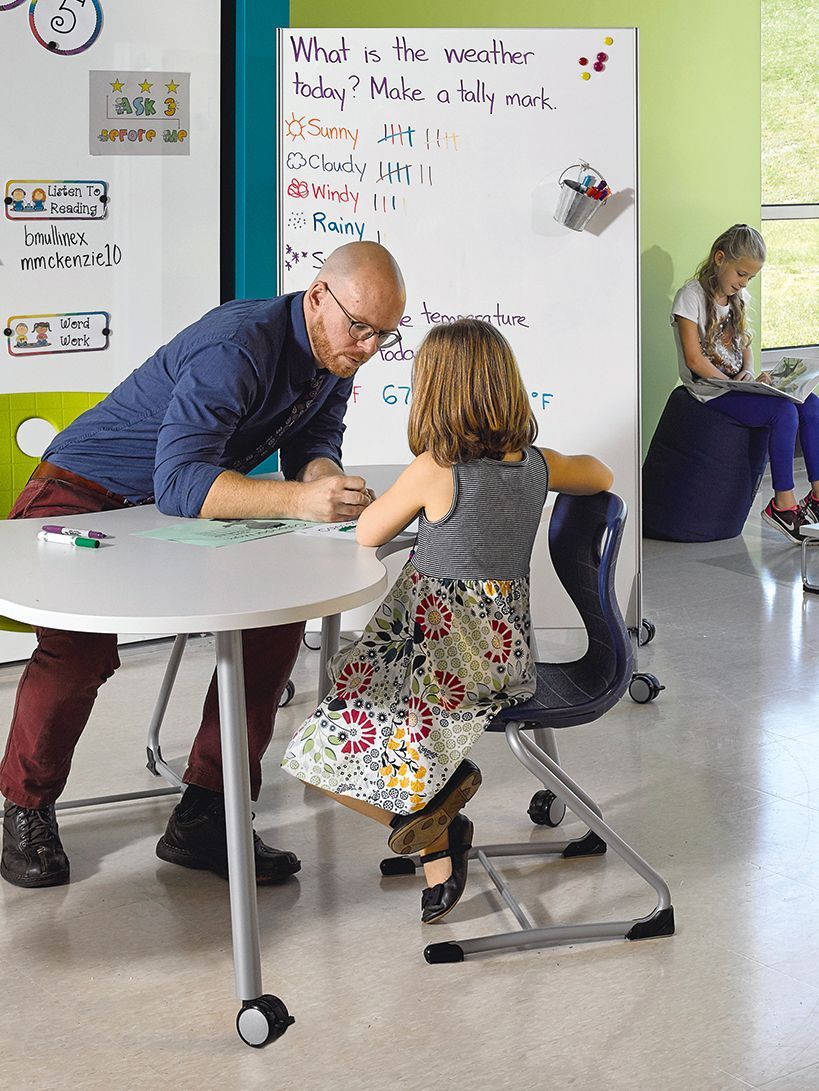
What this needs: good ideas – and easily moveable furniture that is suitable for multiple uses. A classroom, a craft room, a school hall or a corridor can thus be divided into various zones.
Some Furniture Can Do More
Just standing around? We demand more of furniture! Because furniture not only changes rooms, it also creates rooms – especially if it can be tidied away, adapted or used in a different way as required. And this is how existing buildings can keep up with new demands.
For example, multi-functional rooms offer:
Ergonomic seating that can be quickly stacked away and converted
Tables for individual and group work that can be easily moved and regrouped as required
Mobile room dividers that separate the classroom into different zones, but can also be used to display material
Mobile elements with storage space that allow tools to be quickly accessed and put away - which also serve as room dividers
Variable modules for playing close to the floor
Soft, modular elements for quiet times lying down and more postural variety
Flexible board systems for presentation
Mobile computer workstations and digital boards for media work
Naturally, each element and their arrangement must be sturdy, safe and space-saving, and be as noise-reducing and sustainable as possible.
References
All-day offerings are a great responsibility to the next generation - and a challenge for every single school. That’s why we support you with our experienced team of consultants from start to finish, in conception and implementation. Get in touch with us!
You might also be interested in this