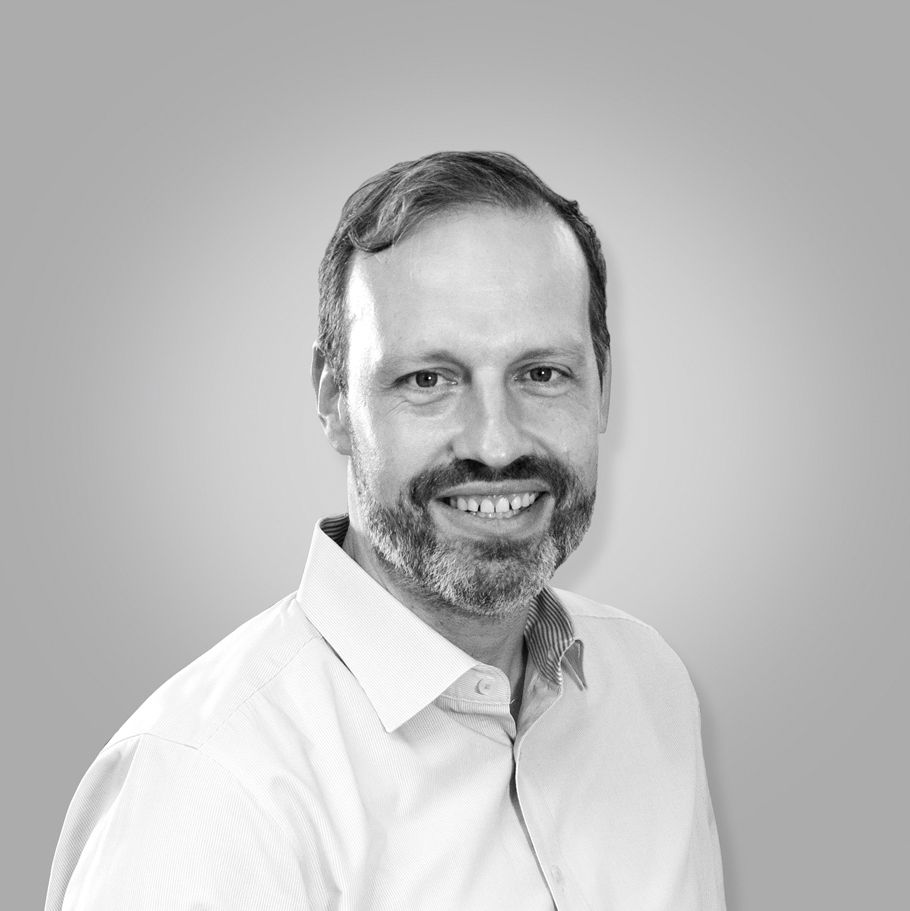
Mr. Pallesche, how did your school become a smart school and what is behind this development?
We introduced a media education profile back in 2015. Before that, I spent one day a week at the State Media Center, where I gained a lot of inspiration. Then the first interactive whiteboards arrived, and it quickly became clear that we didn't just want devices, we wanted a concept. In 2017, we were recognized as the first smart school in Baden-Württemberg.
What specifically makes your school different from others?
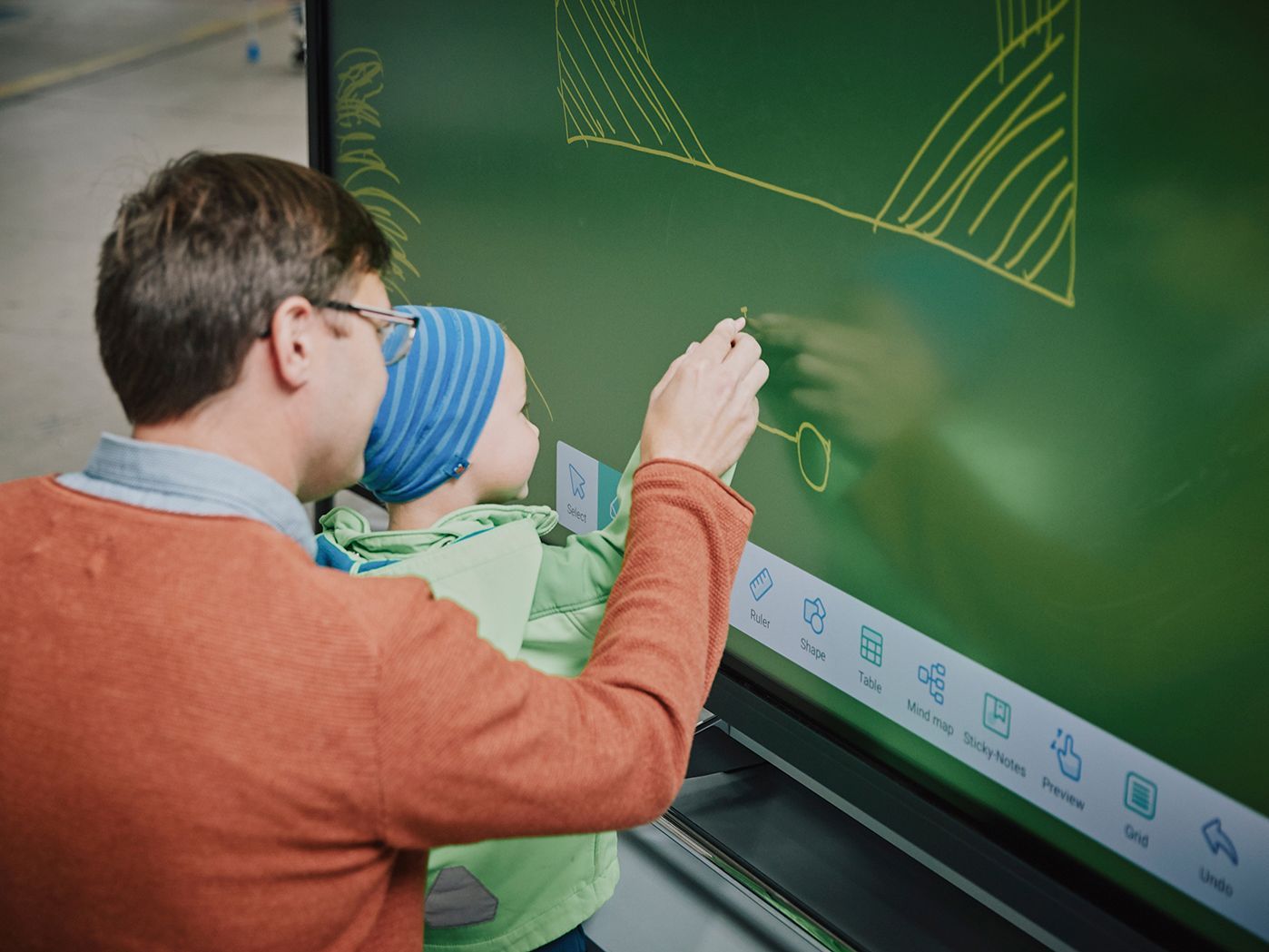
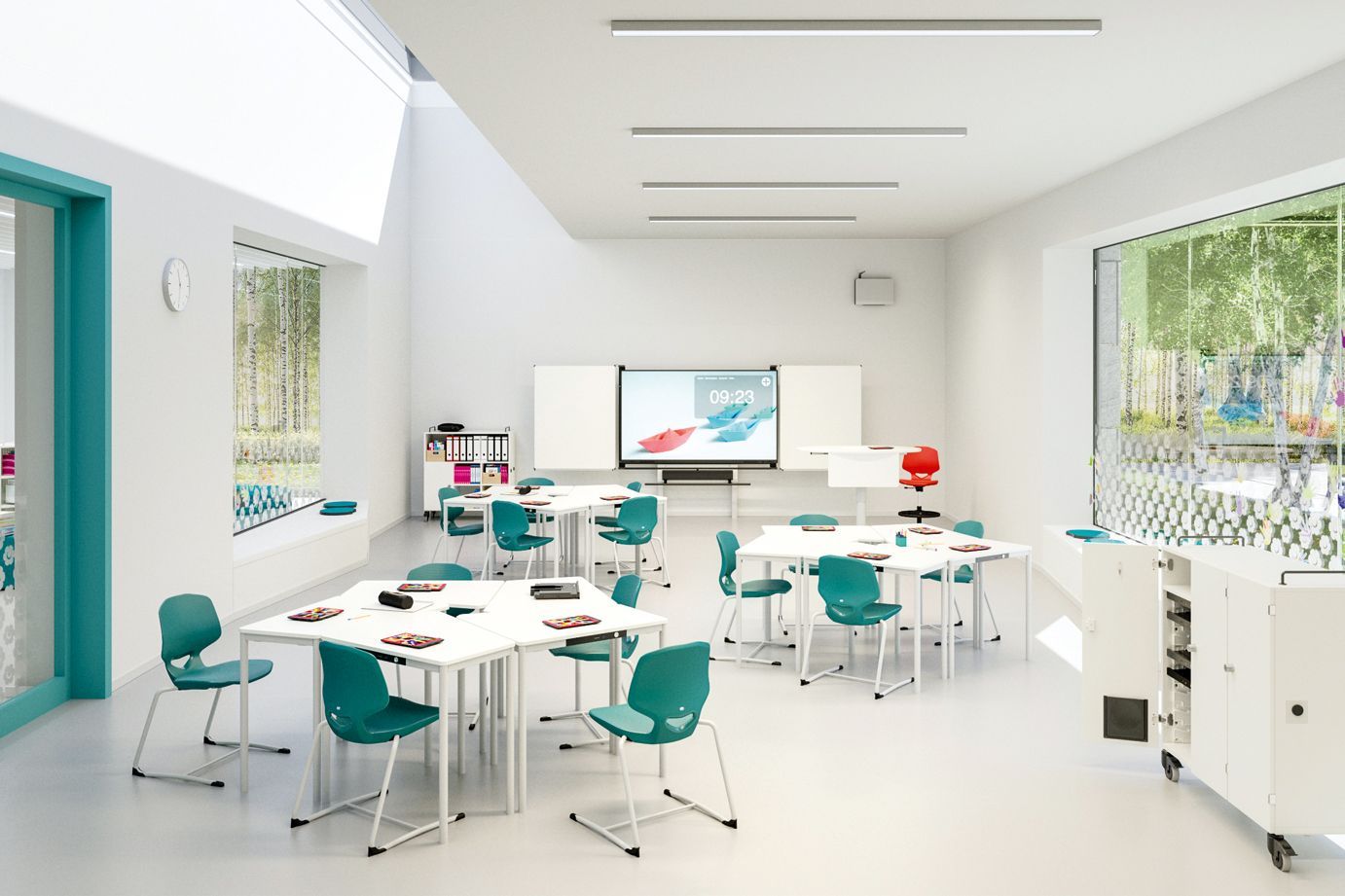
Many people expect a school full of devices. But it's not the equipment that's crucial—although we are very well equipped with tablets, interactive whiteboards, projector technology, and a makerspace. What's more important is that we have changed our teaching and learning processes. For us, it's not about digitization in the sense of technology, but about digitality—in other words, changed cultural practices.
What do you mean by these changed practices?
Digitalization has led to changes in social practices:
- Community
- Co-creation
- Openness to results
- Participation
- Referentiality
We apply precisely these principles to school learning. We call this post-digital – because it is no longer primarily about technology, but about the way we learn and live together.
What does that look like in the classroom?
We divide it into three parts: traditional input phases, collaborative work, and self-organized learning. Students can choose where they want to learn—in the classroom, in the hallway, or outside. Some need more guidance, but the goal is always the same:
“More personal responsibility, more creativity.”
Micha Pallesche, Principal of Ernst Reuter School, Karlsruhe
How do you manage to open up the school in this way?
We open up spaces, times, and content. On the one hand, our doors are always open—in the literal sense. On the other hand, we work together with partners outside the school. In the subject “Life,” which we have introduced, students take on responsibility, whether in the classroom or later in the neighborhood: in retirement homes, kindergartens, or animal sanctuaries. This is not a side issue, but part of our concept.
What connection do you see between these openings and the culture of digitality?
If I want to enable students to find their way in a complex world, I have to think of school as a space of possibility. The world is no longer clearly structured—so learning must tolerate open-ended results, recognize complexity, and function collaboratively. These are precisely the principles of the culture of digitality, as described by Swiss cultural and media scholar Felix Stalder.
How far along is school overall with this transformation?
There is the SAMR model to describe the use of digital technologies and media in the classroom. The abbreviation stands for Substitution, Augmentation, Modification, and Redefinition. Many schools stop at “A”: there are new devices and new interfaces, but the underlying concepts remain the same. However, real change requires modification and redefinition. This also means that role perceptions must change, as must exam formats.
“Our school is about digitality rather than mere digitization”
Micha Pallesche, Principal of Ernst Reuter School, Karlsruhe
Can you give an example?
During the coronavirus pandemic, we introduced the THEA project—theme-oriented work. We bundle content from one-hour subjects such as biology, geography, and physics into a thematic area, such as “forest” or “energy.” One morning a week, students work across subjects. They create products such as explanatory videos, models, or presentations, some of which are public—for example, at the Karlsruhe City Festival. It's collaborative, creative, and realistic.
What role do digital media play in this?
They are no longer just a tool, but part of the learning process. When students create content independently and work creatively with media, media becomes a “nutritional staple.” It is no longer a matter of digitizing analog processes, but of rethinking learning.
How are teachers responding to this change?
Many teachers have never left school—they reproduce the structures they themselves experienced. That makes change difficult. But we are noticing that something is shifting. The important thing is:
“Transformation is not achieved through technology alone, but through a change in attitude”
Micha Pallesche, Principal of Ernst Reuter School, Karlsruhe
What does this mean for performance?
We live in a meritocracy—and that's fine. But performance needs to be rethought: no longer just as individual achievement, but also as the ability to contribute to collaborative processes. Creativity, cooperation, responsibility—these are achievements in the digital age.
What do you think of smartphone bans in schools?
I don't believe in blanket bans. Young people are already active in digital spaces. It's more important to guide them. At our school, we work with managed devices that are protected but open enough to be used for meaningful learning. School is the only place where we can reach all children – that's why media education belongs there.
What would happen if schools refused to embrace digital technology?
If schools ignore the culture of digital technology, they will lose touch with reality. We need openness, creativity, and the courage to change. Only then can we prepare children for a world that is becoming increasingly complex.
More about digitization in schools

Immediate support specifically for interactive media is available from our service hotline.
Monday to Friday: 8:00 - 16:30
- +49 9341 88-3333
- Contact request VIT

Spread the word – arouse interest
Share this page and arouse interest in others.