The immersive learning room miri
From the outside, miri is a cube with a base measuring three by three metres. Inside, a new form of learning unfolds: three-sided projections created by interactive projectors allow pupils to immerse themselves in virtual learning environments. They experience realistic situations, explore content independently and interact directly with the environment on display.
Whether it’s historical periods, scientific experiments or interactive simulations – here, learning isn’t just taught, it’s experienced. The learning space works without 3D glasses or additional devices, thus enabling pupils to work together in the room. This room concept is based on the principle of immersive learning.
Holistic learning concept
Miri consists of three coordinated components: technical equipment, didactically prepared content, and an accompanying training concept.
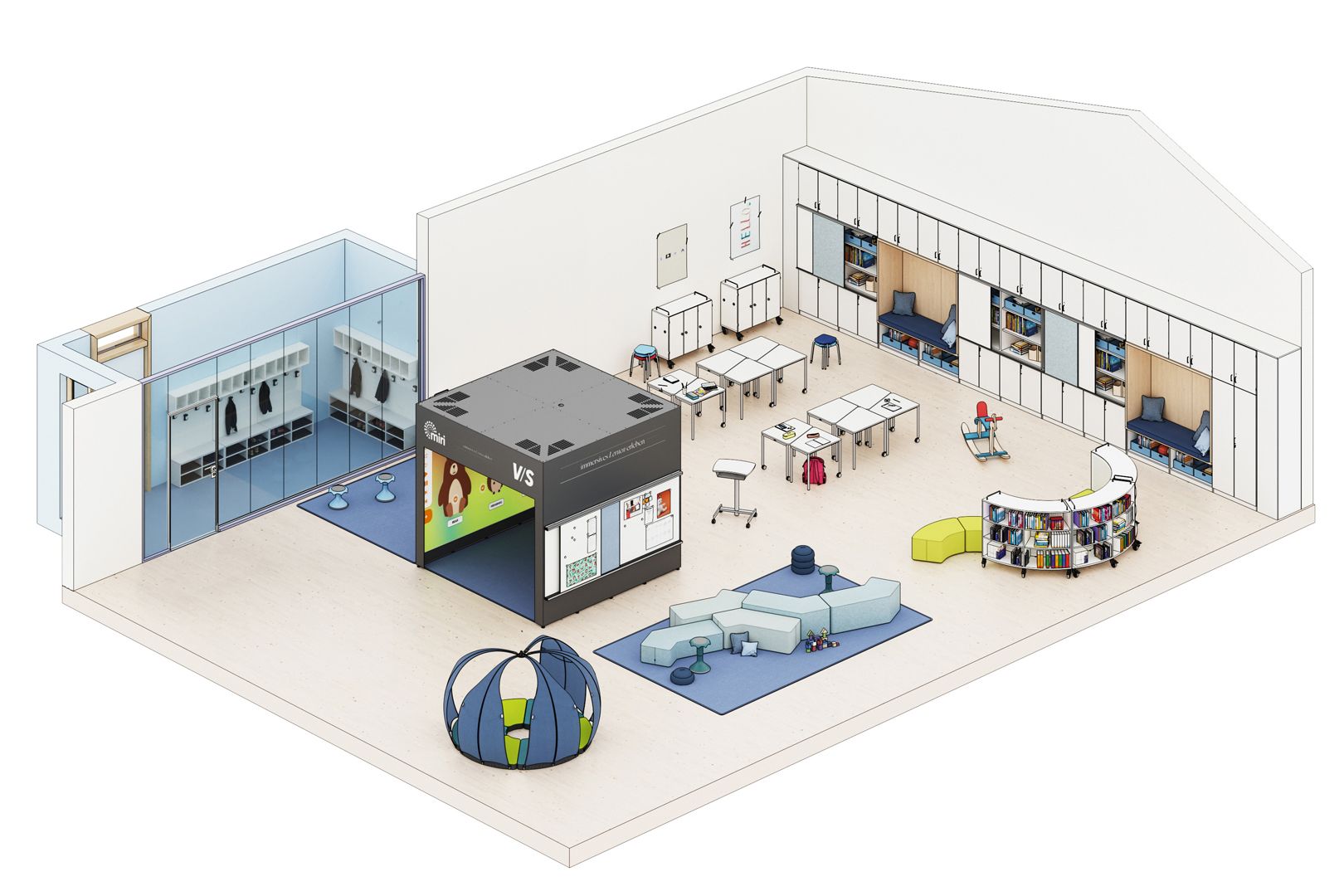
miri – the key data
Dimensions (approx): H 275 cm, W 312 cm, D 312 cm
Material: Aluminium skeleton, projection surfaces inside and outside as well as ceiling cladding made of various plastic materials
System components: high-performance PC, three powerful projectors, touch sensors, stereo speakers; on the outer walls, which can be extended with long wall panels and/or other visual media
Content
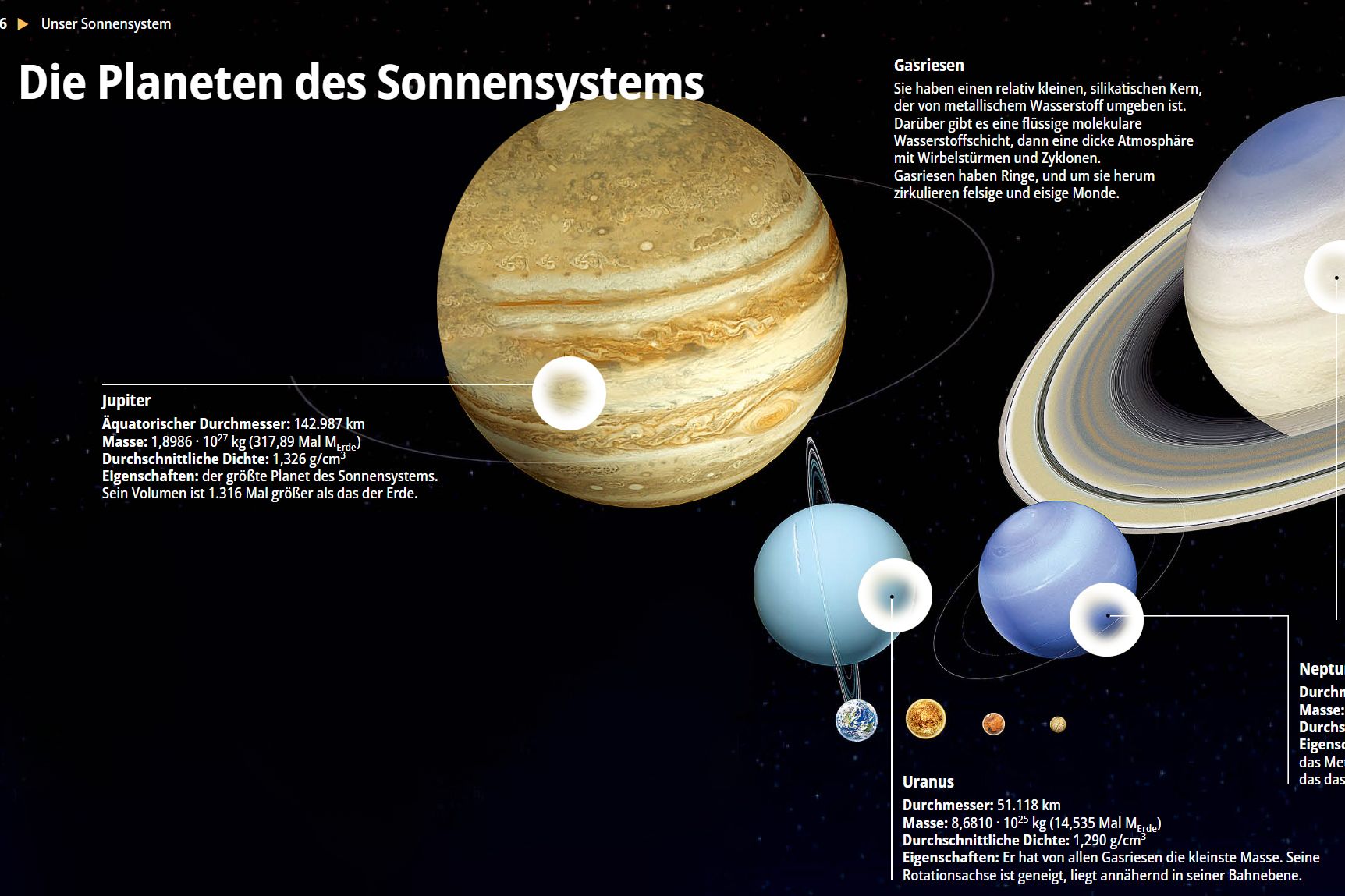
Miri comes with educational content for different age groups, so teachers can start using it in class right away.
In addition, miri includes editor software that can be used to create your own interactive learning content. This content can be adapted precisely to the format of the immersive learning space. The editor can be used in combination with Genially, for example.
Since the system is based on a standard Windows operating system, other learning programs or applications can also be easily integrated. This keeps the use of miri flexible and adaptable to your individual needs.
Training concept
For sustainable use in the classroom, the miri concept includes two on-site training courses:
Part 1 – Software overview
Presentation of various software solutions using demonstrations and practical examples, as well as analysis of their respective applications.
Part 2 – Authoring training
Intensive training in the selected authoring tool with the aim of enabling teachers to independently create immersive presentations and use them in the classroom.
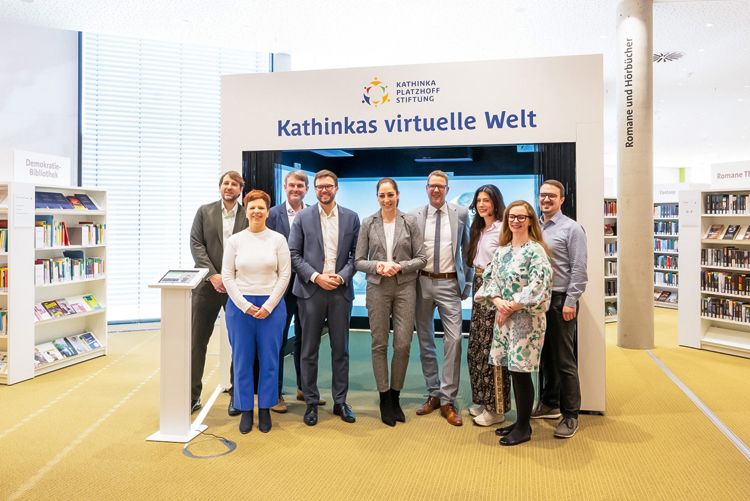
Eröffnet wurde der immersive Lernraums im Hanauer Kulturforum mit Vertretenden aus Politik, Wissenschaft, des Kulturforums, der KP- Stiftung und Fördernden.
Eröffnet wurde der immersive Lernraums im Hanauer Kulturforum mit Vertretenden aus Politik, Wissenschaft, des Kulturforums, der KP- Stiftung und Fördernden.
Eröffnet wurde der immersive Lernraums im Hanauer Kulturforum mit Vertretenden aus Politik, Wissenschaft, des Kulturforums, der KP- Stiftung und Fördernden.
miri in action
On 3 March 2026, the Kathinka Platzhoff Foundation opened miri, an immersive learning space that is unique in Germany. It is located in the Kulturforum Hanau, is called ‘Kathinka's Virtual World’ and is open to all visitors.
What does immersive learning mean?
Immersive learning is when the learners dive into a virtual environment, so to speak, that reflects the real or simulated circumstances of a specific subject. External stimuli that could be a distraction are minimised – the pupils are completely absorbed in and engaged with their subject. They solve problems in interaction with the virtual environment, alone or in a small group.
Thanks to the immersive experience in the virtual space, learners acquire more than just theoretical knowledge. They can also develop practical skills and problem-solving abilities that are important in real contexts. That’s why this method is suitable for all age levels and subject areas, from school and apprentices right up to further training.
Why is immersive learning effective?
Two factors are crucial:
Immersion
The more spatially and visually immersed learners are in a topic, the more intensively they engage with it. miri uses three-sided projections to create a closed learning environment that focuses entirely on the content.
Co-creation
Learning becomes particularly sustainable when content is not only viewed but actively worked on. Touch technology and collaborative work in the room enable students to become active participants.
The combination of spatial immersion and active participation makes all the difference. And this is exactly where miri comes in.
“Learning is experience everything else is just information”Albert Einstein
The six learning gains of miri
- Focus
The learners concentrate full on the learning content, the rest of the surrounding world is screened out. - Interactive experiences
The wide variety of interactive elements enables learners to interact actively to the content. They can get hands on, discover and experiment and become the protagonists in the lesson. - Multi-sensory learning
Learning is enhanced by the use of various senses (sight, hearing, touch). Multisensory experiences foster understanding and help pupils to remember the learning content better. - Realistic simulations
Using the projections, real or complex scenarios can be reproduced that would be difficult or impossible to simulate with traditional teaching methods. This can be beneficial in many subject areas – from modern languages and science and technology right up to social and creative subjects. - Personalised learning
The learning content can be designed by the teachers themselves. It can therefore be individually tailored to the achievement and knowledge levels of the group. - Active cooperation
No further aids are needed in the immersive learning space, not even 3D-glasses that restrict vision. That’s why group work is possible. Interaction and cooperative learning formats are supported by the problems.
This might also interest you